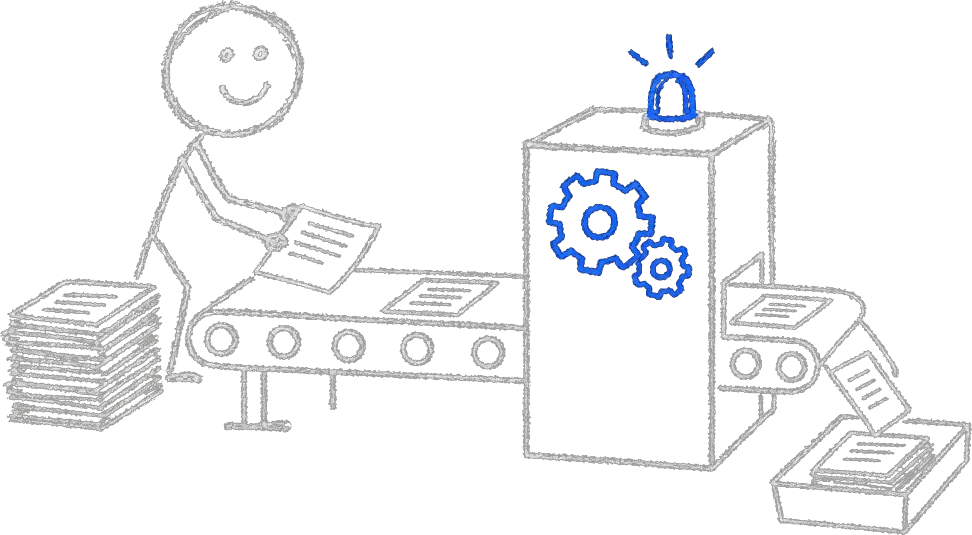
Business process automation hands repetitive work to a system, not people. Copying data between tools. Writing the same email for the tenth time. Rebuilding the same report every Monday.
We find that work, measure what it costs you, and build automation that takes it off your team's plate.
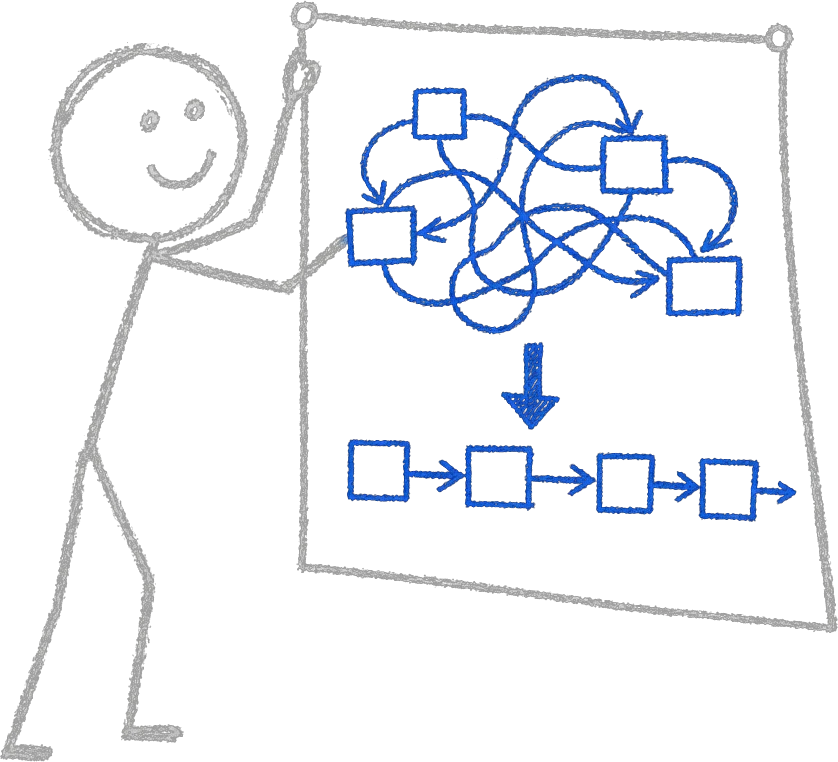
Business process automation is not about buying more software. It is about connecting the tools you already have, then putting AI in the gaps where a person used to copy, paste, check, and chase.
We start with a working session on your actual workflows. You show us where the hours go. We come back with a build plan: what gets automated first, what it connects to, and what it saves you per month.
Where Does Automation Pay Off First?
The highest-return automations are rarely glamorous. They are the daily tasks nobody questions anymore.
Quote and invoice generation+
Quotes draft from call notes or form inputs and invoices go out the moment a job closes. No one copies numbers between systems. See the service →
CRM updates after every call and email+
Every interaction gets logged automatically, keeping deal stages, contact notes, and pipeline status current without a rep spending time on data entry. See the service →
Weekly reporting and KPI summaries+
Monday morning reports pull from live systems and deliver to inboxes on schedule. No spreadsheet assembly, no waiting on the person who built the template.
New-customer onboarding sequences+
The moment a contract is signed, the system fires: welcome emails, intake forms, calendar invites, and task creation in your project tool, without a coordinator. See the service →
Data entry between disconnected systems+
Data entered once flows automatically to every system that needs it. No copy-paste between your CRM, accounting tool, and project board. See the service →
Document review and routing+
Incoming documents are read, classified, and routed to the right person or queue automatically. Key fields get extracted and filed without manual triage. See the service →
Appointment reminders and follow-ups+
Reminders go out on the right schedule and follow-up messages land after each appointment. The sequence runs whether or not anyone is watching the calendar. See the service →
Inventory and order status checks+
Stock levels and order status pull from your inventory system automatically and surface in dashboards, alert emails, or customer-facing replies.
Internal status notifications+
When a job moves, a payment clears, or a deadline approaches, the right person gets notified through the channel they actually check. See the service →
Lead research and enrichment+
New leads arrive with company, title, and contact data already filled in. The research that used to take twenty minutes per prospect happens in seconds. See the service →
AI bookkeeping+
Transactions are categorized, receipts are matched to invoices, and monthly reconciliation runs without a bookkeeper doing it manually. See the service →
How Does an Engagement Work?
Week one is diagnosis: we shadow the workflow, count the hours, and rank the bottlenecks by cost. Week two onward is the build: one automation at a time, tested against your real data before it touches production.
You get a system your team actually uses, documentation a new hire can follow, and a number: hours returned per month.
Common Questions
What does business process automation cost?
Scoped builds start small. We price by the workflow, not by the hour, so you know the cost before we start. Most first projects pay for themselves in recovered staff time within a quarter.
Do we need to replace our current software?
Almost never. We build on top of the tools you already run: your CRM, your inbox, your spreadsheets, your scheduling system. Automation connects them instead of replacing them.
How is this different from off-the-shelf automation tools?
Simple triggers are a slice of what we do. We add AI where judgment used to require a person: reading documents, drafting replies, classifying requests, summarizing reports. That layer is what removes the work instead of just moving it.
How long until something is live?
The first working automation usually ships within two to three weeks of the diagnosis session. We ship one workflow at a time so value lands early.