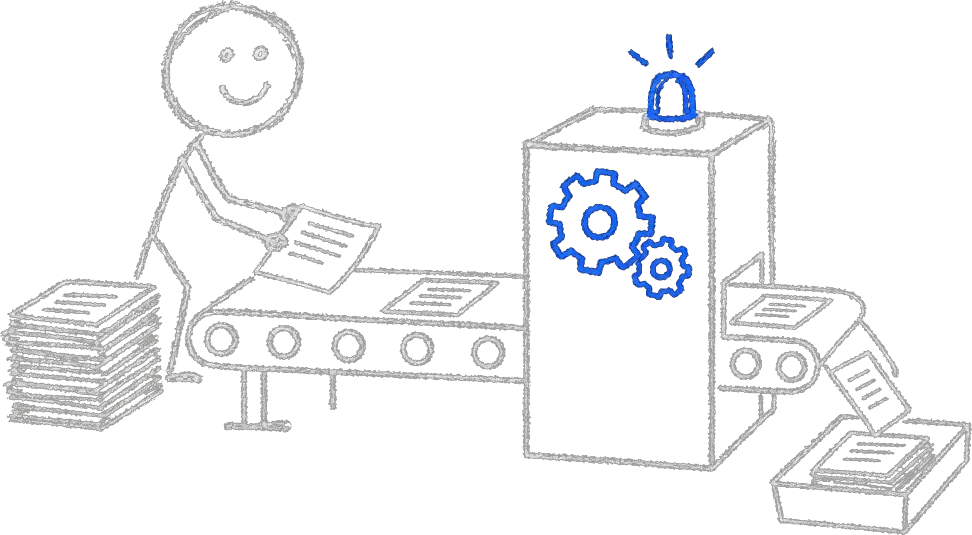
Business automation in Palmetto runs the back office for agriculture, port logistics, manufacturing, and freight. That back office is usually stuck in 2005. Paper logs, manual data entry, spreadsheets that break when one person is out.
We build automation that fits the pace of a Palmetto operation, not a downtown tech office.
Most of our Palmetto clients come to us because a process that worked when the company had six people is falling apart at thirty. The work doubled, the system did not scale, and now someone is spending four hours every day on data entry that should take four minutes.
We map the process, find the repeatable steps, and replace them with software that runs without supervision.
Where Does Automation Fit in Palmetto Businesses?
Three industries in Palmetto carry most of our automation work.
Port Manatee logistics operators+
Inbound freight tracking, customs paperwork, and drayage dispatch across disconnected systems get unified so operations managers see the full picture without logging into four different portals.
Agricultural supply businesses+
Grower invoices, delivery confirmations, and USDA compliance forms reconcile automatically instead of by hand at the end of each week.
Small manufacturers+
Production logs that used to be transcribed from paper into QuickBooks hours after a shift now sync automatically as jobs close. See the service →
Trucking and carrier companies+
Load dispatches logged via phone get entered into TMS software automatically. No manual rekeying after each call. See the service →
Lawn and landscaping crews+
Scheduling, invoicing, and payment follow-up run automatically so field crews focus on the work and owners do not spend evenings on admin. See the service →
Distribution warehouses+
Inbound purchase orders and outbound shipment confirmations move through an integrated system instead of disconnected email threads.
What Do We Automate for Local Operations?
Shipment status updates from carrier portals+
Status changes pull from carrier sites and push to your team without anyone logging in manually. See the service →
Invoice generation from completed job records+
Field software job closures trigger invoice creation automatically so billing goes out the same day. See the service →
Inventory count reconciliation+
Warehouse scan data reconciles against your accounting system automatically, catching discrepancies before they become accounting problems.
Payroll prep from time-tracking apps+
Hours are formatted and validated before they reach your accountant. No manual reformatting, no transcription errors. See the service →
Customer delivery notifications+
Automated updates go to customers when order status changes, reducing inbound calls asking where an order is.
New vendor onboarding packet assembly+
Required documents are collected, completeness is checked, and the packet routes for signature without a coordinator managing each step. See the service →
AI bookkeeping for Palmetto operations+
Transaction categorization, receipt matching against purchase orders, and monthly reconciliation run without a bookkeeper doing it manually. See the service →
AI scheduling assistant for seasonal workforce+
Agricultural and field service businesses assign crews to open slots based on location, availability, and job type without the owner making every call. See the service →
Compliance document collection and filing+
Regulated shipments get the right documents collected, reviewed for completeness, and filed automatically. See the service →
How We Work
We start with a working session where you walk us through the process. Not a survey. An actual walkthrough of the steps, the tools, and where the work piles up.
From there we build one automation at a time, test it against your real data, and hand it off with documentation. You do not need a developer on staff to keep it running.
Common Questions
Can you connect to the systems we already use at the port or warehouse?
Yes. We build integrations with TMS platforms, ERPs, QuickBooks, Google Sheets, and most cloud-based tools. If your legacy system has an export function or an API, we can connect to it.
How small is too small for automation to make sense?
If a repeatable task takes more than two hours a week and follows a consistent pattern, automation usually pays off. That applies to a six-person operation as much as a sixty-person one.
Do we need to be in Sarasota for meetings?
No. We can work fully remote. We serve Palmetto from Sarasota and can arrange a visit to your facility if seeing the physical workflow is useful.
Outcome
01Manual data entry replaced by automated sync.
02Faster invoice and billing cycles.
03Field and office systems that talk to each other.