

What Does It Mean to Treat Context as a Budget?
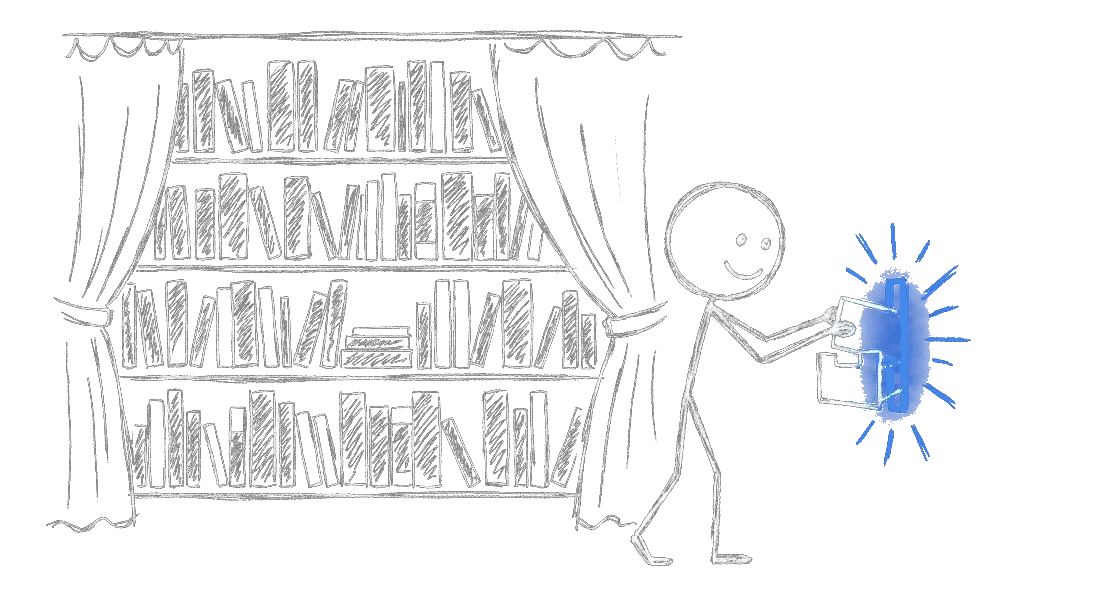
Treating context as a budget means deciding on purpose what goes into a model's context window instead of loading everything you have. It matters because every token in that window gets processed and billed on every single call in the session.
A context window is paid input, processed fresh on every request, and it does not get cheaper because the window got bigger. Production context windows now run close to a million tokens on both major platforms, and the per-token price stays the same whether you use 9,000 tokens or 900,000 of it. The larger window raises the ceiling on how much you can load, but you still pay for everything you load.
The bigger window does not remove the reliability cost either. Our report on context engineering covers the research showing that models attend worse to the middle of a long context, so a bloated window costs more and is often worse at the job. Keeping context lean therefore solves two problems at once: you pay for less, and you get a more reliable answer from what you did pay for.
How Does Progressive Disclosure Cut Wasted Tokens?
Progressive disclosure cuts waste by keeping a short router file, roughly 50 to 200 lines, in every context and moving the detail into topic files the model opens only when a task calls for them. A giant instructions file is paid for on every call, whether its rules apply or not.
After an agent makes a mistake, the usual response is to add another rule to the main instructions file. Do that enough times and the file reaches four or five hundred lines, at which point every task, however small, pays to load rules that do not apply to it. That costs twice, once in the tokens themselves and again in the attention the model has left for the actual work.
The alternative is a short router file that carries the project overview, the hard constraints, and links to topic files, each with a one-line description of when it applies. A task that touches the database loads the database rules, and other tasks skip them. The router stays small and cheap on every call, and the detail is only paid for when it is relevant. This is the same idea our harness engineering report covers as the state layer of a reliable agent system, applied here to the token bill.
Why Does Delegating Research to a Subagent Save the Main Thread's Context?
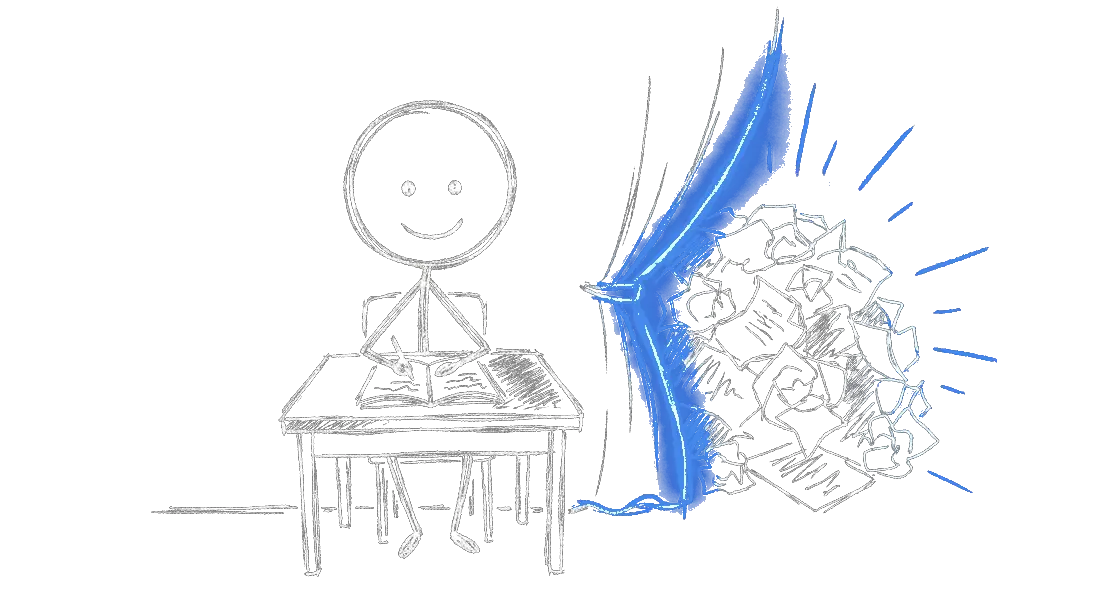
Delegating saves the main thread's context because a subagent does the messy exploration in its own disposable context window and hands back a short summary, so the main thread holds only the finished answer and never the search behind it. The total token bill still goes up.
Fanning work out to subagents is not automatically cheaper. Anthropic's engineering team, writing up the multi-agent research system behind Claude's Research feature, reported that agents typically use about 4 times more tokens than a plain chat, and multi-agent systems use about 15 times more, across the whole system. Multi-agent fan-out spends more tokens in total.
What delegation changes is where the tokens get spent. The main thread's context stays small and focused because the exploration, the dead ends, and the tool output that did not pan out all happened in a subagent's window, which is thrown away when the subtask ends. The parent agent's context grows by one clean result instead of by everything it took to find it. Anthropic's guidance says the trade is worth it for tasks with heavy parallelization, information that exceeds a single context window, and enough value on the line to justify the extra spend. Our field note on multi-agent orchestration covers the fan-out pattern in full.
What Do Anthropic and OpenAI Actually Charge Per Token?
Published mid-2026 rates run from about $1 to $50 per million tokens depending on tier, with output priced several times higher than input on every platform. Which model you route a task to is still the single biggest lever on a token budget.
The model tier you pick still swings your bill more than any caching or delegation trick. Here is what the two major platforms publish for standard API pricing as of July 2026:
| Claude model | Input | Output | Cache read (vs. input) |
|---|---|---|---|
| Claude Fable 5 (Mythos-class, top tier) | $10.00 / MTok | $50.00 / MTok | $1.00 / MTok (0.1x) |
| Claude Opus 4.8 | $5.00 / MTok | $25.00 / MTok | $0.50 / MTok (0.1x) |
| Claude Sonnet 5 (intro, through Aug 31, 2026) | $2.00 / MTok | $10.00 / MTok | $0.20 / MTok (0.1x) |
| Claude Haiku 4.5 | $1.00 / MTok | $5.00 / MTok | $0.10 / MTok (0.1x) |
| GPT-5.6 tier | Input | Output | Context window |
|---|---|---|---|
| Sol (flagship) | $5.00 / MTok | $30.00 / MTok | about 1.05M tokens |
| Terra (balanced) | $2.50 / MTok | $15.00 / MTok | about 1.05M tokens |
| Luna (fastest, cheapest) | $1.00 / MTok | $6.00 / MTok | about 1.05M tokens |
Two details in these tables matter for budgeting. Output tokens cost 5 to 6 times more than input tokens on both platforms, so a verbose answer is a bigger lever than a verbose prompt. And Anthropic's newest tokenizer, used by Fable 5, Mythos 5, and current Opus and Sonnet models, produces roughly 30 percent more tokens for the same text than the older tokenizer, which can partly offset a per-token price cut.
How Much Does Prompt Caching Actually Save?
A cache hit costs about 10 percent of the standard input rate on both platforms, so a stable system prompt, tool schema, or reference document that you reuse across calls becomes nearly free after the first request pays to store it.
Caching targets a specific shape of prompt: a fixed prefix that repeats across calls, followed by a variable tail that changes every time. System prompts, tool definitions and reference documents are typical fixed prefixes, and the user's latest message is the variable tail. Anthropic prices a cache write at 1.25 times the base input rate for a 5-minute cache or 2 times for a 1-hour cache, and a cache read at 0.1 times, a 90 percent discount on the repeated tokens. OpenAI's caching works the same way: cache writes cost roughly 1.25 times the uncached rate, and cache reads get a 90 percent discount, with a 30-minute minimum cache life.
The discounts also stack. Combine prompt caching with batch processing, which both platforms discount by roughly 50 percent for non-time-sensitive work, and the effective rate on repeated, batchable tokens lands around 5 percent of the sticker price. Caching only pays off if the prefix actually repeats, though, and a prompt that changes shape on every call gets none of the discount while still paying the write premium.
Why Does Cross-Session State Also Save Tokens?
Cross-session state saves tokens because a session that rebuilds project context by re-reading a codebase from scratch spends thousands of tokens rediscovering facts a prior session already knew. A short progress file that each new session reads first replaces that rebuild with a three-minute read.
Sessions crash, hit their context limit, or simply close. If nothing was written down, the next session pays the full cost of re-exploring: reading files, re-deriving decisions, and sometimes re-arguing a choice that was already settled. On every multi-session build in our harness engineering practice we install the same two files, a progress file that carries current state and a decisions file that carries the reasoning nobody wants to redo.
A related cost shows up near the end of a long session as well as at the start of a new one. Anthropic's engineering team has documented that models can rush and skip verification steps as a context window fills up, a pattern they call context anxiety. After moving to a model that stopped showing that behavior, they dropped scripted context resets from their harness entirely and let the agent run as one continuous session. Fewer resets means fewer cold re-derivations, so fewer tokens go to rebuilding state that was never lost.
When Does a Bigger Model Actually Beat Raw Efficiency?
A bigger model wins when a task needs deep, long-horizon reasoning, such as hard debugging, architecture review or ambiguous multi-step planning. Efficiency wins almost everywhere else, because most failures trace back to a missing router file rather than a lack of model capability. Confirm the context is right before paying more.
This does not argue against ever paying for a bigger model, only against doing it by default. Our context engineering report covers a pattern we see constantly in client work: a model fails a task, the context gets fixed, and the same model then completes it cleanly with no upgrade at all.
In practice we route by the shape of the task. Mechanical, well-specified work goes to the cheapest tier that can do it, and the bulk of production volume goes to a mid tier. We reserve the top tier for hard, long-horizon reasoning, the kind of review and judgment work we cover in our field comparison of Claude Fable 5 and GPT-5.6 Sol. Making that routing decision per task, instead of defaulting to whatever model is newest, is a token-efficiency practice in its own right. We apply the same approach on custom AI agent builds for clients, where the budget is designed before the first token is spent.